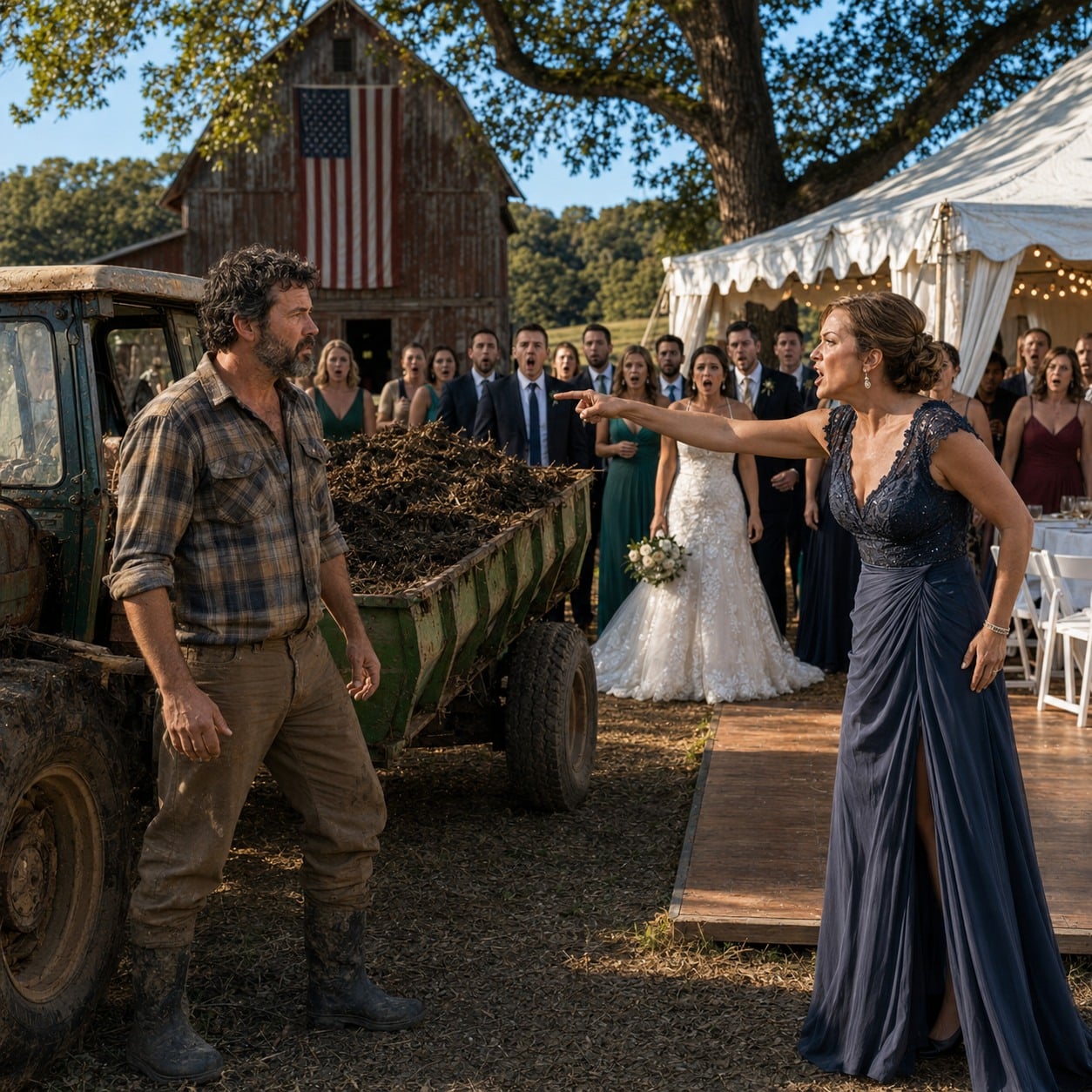
He moved with the stubborn patience of a man who’d survived more than paperwork—blizzards, dry wells, bad markets that hollowed out neighbors and left their mailboxes leaning. The spreader’s chains clinked a rhythm older than contracts, older than the glossy brochures that renamed his ridge “Sunset Vista” without asking. The land didn’t know about easements; it only knew who had stayed when the banks circled and when the hail came sideways. So he loaded the hopper, not in rage, but in recognition.
The first wet slap across lace and linen broke the spell. Guests froze, mouths open, petals sagging under the weight of what the field truly was. No one could pretend it was a backdrop now. The bride’s scream, the planner’s threats, the groom’s red-faced promises of lawyers—all of it scattered like spooked birds. When silence finally settled, it was the old kind, the kind that remembered fence posts driven by hand and calves pulled at 3 a.m. The ridge no longer belonged to their photographs; it belonged to its seasons again, and to the man who had chosen mud over money, staying when everything else had tried to leave.