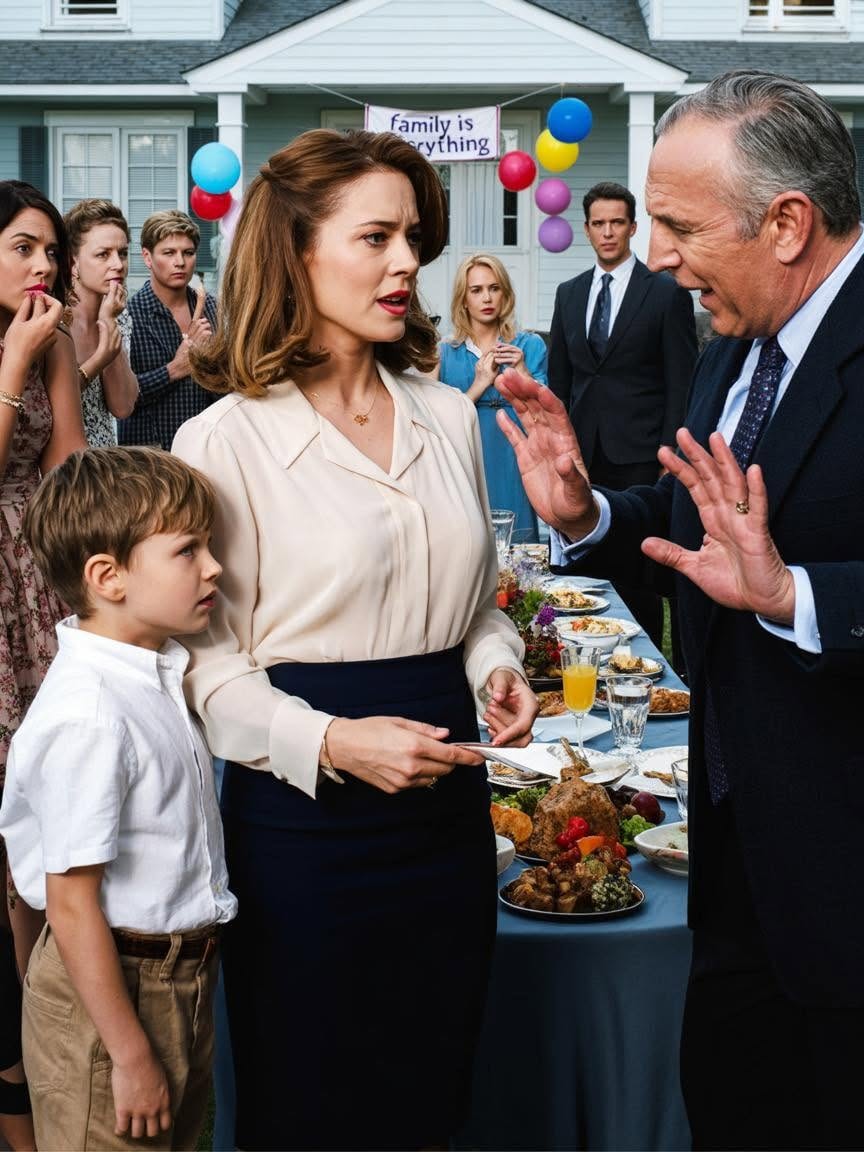
The command in her sister’s voice had once meant safety, shared secrets, and late-night cartoons in superhero shirts. Now it carried only the weight of ownership, as though she were another piece of furniture in a house ruled by fear. When the chair splintered and pain lit up her body, she understood: silence was not peace, only permission. The betrayal in their laughter burned deeper than any bruise, yet underneath the hurt, something steady began to rise.
The forgotten deed, tucked away like an afterthought, transformed into a key. It gave language to her worth, boundaries to her grief, and legal teeth to the word “enough.” Serving the eviction notice felt like stepping through fire, but on the other side was air—clean, sunlit, hers. In the small apartment where her son’s laughter now fills the rooms, she is no longer surviving someone else’s story. She is writing her own, built on choice, tenderness, and the quiet, radical act of staying gone.