My daughter-in-law slid a number across my kitchen island like she was handing me a dinner check.
Five hundred thousand dollars.
She had written it in thick black marker on the back of a bank envelope, underlined it twice, and tapped one polished fingernail against the paper as if I might have trouble understanding it.
“You pay this,” Lauren said, looking me straight in the eye, “or we’re done pretending you’re part of this family.”
My son, Ryan, stood beside her with his shoulders rounded and his hands buried in the pockets of his expensive wool coat. He did not look at me. Not once.
The words hung in the air of my clean kitchen like smoke.
Outside, the late autumn rain moved softly against the windows of my house in a quiet, upscale neighborhood east of Seattle. The maple trees along the street had already dropped most of their leaves, and the slick pavement reflected the porch lights from the houses across the road. It was the kind of neighborhood where people waved while walking their dogs, where garbage bins were pulled in before noon, where everyone pretended not to know anyone else’s business.
Inside my house, my daughter-in-law was trying to buy my fear with a threat.
“Half a million dollars,” I said quietly.
Lauren crossed her arms. Her blonde hair was freshly blown out, her cream-colored sweater probably cost more than my monthly grocery bill, and the diamond on her finger caught the recessed kitchen lights every time she moved her hand.
“You know exactly what this is about,” she said. “Ryan’s investment situation is complicated. We need liquidity.”
Liquidity.
That was the word she used for debt.
Ryan had gotten himself tangled in a string of real estate deals that looked impressive at dinner parties and catastrophic on paper. Flipped homes. Short-term rentals. A commercial property in Tacoma that never leased the way he swore it would. He had talked about passive income, tax advantages, investor circles, and opportunities too good to pass up.
What he never talked about was risk.
Lauren had encouraged every bit of it. She liked saying they were building a legacy, but what she really meant was she wanted a life that looked expensive before they could afford it. Luxury SUV. Designer furniture. Private school waitlists for children they did not even have yet. Weekend dinners at waterfront restaurants where the valet knew her name because I paid the bill more often than anyone admitted.
I knew they were in trouble. I had known for months.
But demanding my money as if it were theirs by birthright was a different kind of disrespect.
I looked down at the number again.
$500,000.
Then I looked at my son.
“Ryan,” I said.
He shifted his weight.
Lauren answered for him. “Don’t put him in the middle of this.”
I almost laughed.
He was my son. He had been in the middle of my life from the moment the nurse placed him in my arms at Swedish Medical Center thirty-nine years earlier. I had packed his lunches, sat through his Little League games in the rain, helped him through college, paid for the down payment on his first condo, and stood beside him at his father’s funeral when he trembled so hard I had to hold him up.
And now his wife was telling me not to put him in the middle of a conversation where she had just threatened to erase me from the family if I did not hand over half a million dollars.
“Is this what you want?” I asked him.
Ryan’s jaw tightened.
“Mom,” he said finally, his voice low. “We’re under a lot of pressure.”
“That wasn’t my question.”
He looked at the floor again.
Lauren made an irritated sound. “This is exactly what I mean. You always make everything emotional.”
“It is emotional,” I said. “You are standing in my kitchen asking me for half a million dollars and threatening to cut me off from my own son if I say no.”
Lauren’s face hardened.
“You’re sixty-eight, Margaret. You live alone in this big house. You have more than you need. We’re your family. What exactly are you saving it for?”
There it was.
The truth, plain and ugly.
To Lauren, I was not a mother. I was not a widow who had worked thirty years beside my husband to build a secure life. I was not a woman who had earned peace after burying the man she loved.
I was an account balance with gray hair.
Ryan rubbed one hand over his face.
“Mom, please,” he said. “Just help us this once.”
I stared at him.
Just this once.
I had heard those words when I covered three months of their rent after Ryan’s first failed deal. I had heard them when Lauren’s SUV lease payment bounced. I had heard them when their credit card debt became “temporary cash flow pressure.” I had heard them when they needed money for a vacation they insisted was already booked and nonrefundable.
Just this once had become a family tradition.
But this time, Lauren was not asking.
She was collecting.
“If you refuse,” Lauren said, “then don’t expect invitations anymore. Not holidays. Not birthdays. Not anything. We’re not going to keep letting you sit at our table while you watch us struggle.”
I glanced around my kitchen.
My kitchen.
The same kitchen where Ryan used to do homework at the island while his father made grilled cheese sandwiches on rainy nights. The same kitchen where my husband, Thomas, had gripped the counter during his final months because walking from the bedroom to the table became a victory. The same kitchen where Lauren had accepted champagne after Ryan proposed, smiling sweetly while calling me “Mom” for the first time.
I placed both palms flat on the cool granite.
Then I stood.
Slowly.
My back was straight. My hands were steady. My voice, when it came, was calm enough to surprise even me.
“If that is the price of staying in your family,” I said, “then I am done.”
Lauren blinked.
Ryan lifted his head.
“What?” he said.
“I said I’m done.”
Lauren’s mouth parted slightly, as if she had not prepared for this part.
I walked past them to the small brass hook near the mudroom door and took my car keys from it. My purse sat on the bench below, exactly where I had left it after coming home from the grocery store that morning.
“Mom,” Ryan said, stepping toward me. “Wait.”
I turned back.
“No,” I said. “You gave me three days, didn’t you? Friday at noon. That is what your text said before you came over.”
Lauren’s eyes narrowed. “So you’ll do it?”
I smiled a little.
“I’ll use the three days.”
Then I opened the door to the garage, got into my car, and drove away from the house that was legally mine.
No shouting.
No tears.
No slammed doors.
I had wasted too many years keeping the peace for people who mistook my kindness for weakness.
As I pulled out of the driveway, I saw Ryan standing on the porch through my rearview mirror. Lauren was beside him, her arms folded, her expression sharp and confused.
They had expected panic.
They had expected begging.
They had expected an old widow to fear loneliness so much that she would pay any price to avoid it.
They had forgotten something important.
Loneliness had already been living in my house for years. It wore my son’s face and spoke in my daughter-in-law’s voice. It came to Thanksgiving dinner only when I paid for catering. It called when it needed childcare, groceries, rent, or repairs. It smiled at me in public and treated me like a burden in private.
By the time I reached the end of my street, my heartbeat had stopped racing.
By the time I turned toward downtown Bellevue, the fear had cooled into something harder.
Resolve.
My first stop was Evergreen Community Credit Union, a brick building tucked between a dentist’s office and a bakery that always smelled like cinnamon when the wind came from the north. I had banked there for more than twenty years. The branch manager, Paul Henderson, had helped Thomas and me refinance the house after Ryan left for college. He had sent flowers when Thomas passed.
When I walked in, Paul looked up from his office and smiled.
“Margaret,” he said. “Good morning.”
“Good morning, Paul.”
Something in my face must have warned him not to make small talk. He stood and closed his office door behind me.
“What can I do for you?”
I sat across from him and set my purse in my lap.
“I need to revoke every power of attorney and emergency access authorization I ever gave my son,” I said. “Effective immediately.”
Paul’s expression changed, but his voice stayed professional.
“All right,” he said. “We can start that today.”
“I also need new account passwords, new security questions, and written confirmation that no one but me can authorize transfers, withdrawals, account inquiries, or wire requests.”
He nodded once.
“Understood.”
He did not ask why.
That was one of the reasons I trusted him.
The paperwork took nearly an hour. While he printed forms and made calls, I opened my banking app and changed every password I had. Checking. Savings. Brokerage login. Credit card portal. Utilities. Insurance. Even my Costco account, because Lauren had used my membership and my stored card for years without a flicker of embarrassment.
Ryan had emergency access because I had trusted him.
That access ended while the rain streaked down Paul Henderson’s office window.
When the last document was signed, Paul slid a folder across the desk.
“You’re protected on our end,” he said. “But I recommend you contact your attorney as well. Estate documents, medical directives, anything with your son listed.”
“I’m going there next.”
Paul paused.
“I’m sorry, Margaret.”
I looked at him for a moment.
“So am I,” I said. “But not as sorry as I was yesterday.”
From the credit union, I drove to a small hardware store near Lake Hills, the kind with narrow aisles, handwritten signs, and two older men at the counter who knew the difference between helping and hovering.
I bought three new deadbolts, a reinforced strike plate, and a video doorbell that connected to my phone.
The young clerk asked if I needed installation.
“No,” I said. “I’ve changed locks before.”
He looked surprised. People often did when women my age knew how to do practical things. Thomas had taught me after our first apartment in Seattle had a back door that stuck in winter. Over the years, I had learned that depending on someone else for every small repair was its own kind of vulnerability.
When I got home, Ryan and Lauren were gone.
Of course they were.
They had likely gone to lunch somewhere with cloth napkins, convinced that I was driving around town arranging a wire transfer.
I carried the hardware boxes inside, locked the door behind me for the last time with the old key, and went to the basement for the toolbox.
Changing the front door lock felt strangely soothing.
The screws came out cleanly. The old brass hardware loosened in my hands. The new deadbolt slid into place with a satisfying click. I did the side door next, then the garage entry, then the back door that opened onto the terrace.
One by one, the house returned to me.
When I finished, I made tea and sat at the kitchen island.
The envelope with the $500,000 demand still lay on the counter where Lauren had left it.
I picked it up and turned it over.
On the front was a past-due notice from one of Ryan’s lenders. Not a bank I recognized. Not a mortgage company. A private financing firm with an address in Portland and language cold enough to make my stomach tighten.
So that was why Lauren had written on it.
She was not only demanding my money.
She had done it on top of proof that their world was already collapsing.
My phone buzzed.
Lauren.
We expect confirmation of the transfer by Friday at noon. Don’t make this harder than it has to be.
I set the phone facedown.
No answer.
Instead, I opened my laptop and began making a list.
Not a list of grievances. I had no interest in reliving every insult, every cold dinner, every moment Ryan looked away while Lauren treated me like staff.
I made a list of facts.
Monthly transfer to Ryan’s landlord.
Canceled.
Automatic payment for Lauren’s SUV lease.
Canceled.
Shared grocery account at Madison Market.
Canceled.
Gas cards.
Canceled.
Streaming services they used but I paid for.
Canceled.
Private storage unit where Lauren kept seasonal decorations and furniture she no longer liked.
Canceled.
House cleaning service for their rental.
Canceled.
Meal delivery subscription.
Canceled.
I worked slowly and carefully, saving confirmation numbers and screenshots into a folder labeled Household Changes.
That title made me smile.
By the time the sky darkened over the back garden, I had ended nearly six thousand dollars a month in support they had trained themselves not to see.
The faucet was officially turned off.
That night, I slept better than I had in years.
The next morning, the house felt unusually still.
Normally, Lauren would have called before nine. She always had some task for me wrapped in the language of family. Could I pick up dry cleaning? Could I meet the furniture delivery? Could I run to Whole Foods because Ryan forgot almond milk? Could I watch their dog while they went to Portland for “business networking”?
Today, nothing.
They thought silence would scare me.
Instead, it gave me room to think.
I walked through my house with a cup of coffee and saw it clearly for the first time in a long while.
Not the house Thomas and I had built with patience.
The house Ryan and Lauren had slowly occupied with entitlement.
Lauren had taken over the west-side den the previous year and called it her office. She did not live with me, but somehow she had claimed one of the brightest rooms in my home, the one with the tall windows facing the Japanese maple. She had replaced my old reading chair with a white designer desk, pushed family photo albums into the closet, and moved Thomas’s bookshelf to the basement because, in her words, “the room needed to feel less dated.”
I stood in the doorway and looked at the desk, the velvet chair, the gold lamp, the framed fashion prints, the stack of unopened packages addressed to her at my house.
Then I went to the garage for boxes.
I did not throw things wildly. I did not break anything. I wrapped the lamp carefully. I folded the throw blanket. I placed her little ceramic trays and scented candles into newspaper.
Methodical work has a way of calming the mind.
Every box I sealed felt like one more inch of my life being returned.
In the closet, behind two garment bags, I found a canvas tote filled with old framed photographs that had belonged on the den shelves. Ryan at age seven missing both front teeth. Thomas holding a salmon he caught near Anacortes. My mother in her church dress, smiling at a Fourth of July picnic. Our family in front of Mount Rainier one summer before grief became part of our story.
Lauren had hidden them like clutter.
I carried the photos back to the den and placed them on the shelves again.
The room exhaled.
Around lunchtime, I drove to Madison Market, the upscale organic grocery where Lauren loved to shop on my account. The owner, a silver-haired woman named Denise, had known me for years. She looked up from arranging local honey jars and smiled.
“Margaret. Good to see you.”
“You too, Denise.”
I kept my voice pleasant.
“I need to change something on my account. From now on, please don’t allow anyone to charge purchases unless I am physically present.”
Denise’s face shifted just enough to tell me she understood more than I had said.
“Of course.”
“My son and daughter-in-law will be paying for their own groceries from now on.”
She nodded.
“I’ll make a note right away.”
“Thank you.”
On the way out, I bought sourdough bread, apples, and a wedge of cheddar because I wanted them, not because anyone had sent me a list.
As I drove home, I saw Lauren’s SUV pass the intersection ahead of me. She was heading toward their rental house, probably still convinced I was wrestling with guilt.
She did not know the card connected to that SUV payment was already dead.
At home, I sat in the garden with my lunch and watched chickadees hop along the wet branches of the lilac bush.
For the first time in years, I did not feel like the family servant.
The countdown had started.
And the quiet before the storm felt almost beautiful.
Thursday morning brought the first crack.
It came from Lauren, not Ryan.
My phone lit up at 9:12 a.m.
Then again at 9:14.
Then 9:16.
By 10:00, I had ten missed calls and six texts.
Why is the card being declined?
Call me immediately.
This is embarrassing.
Margaret, don’t play games.
Ryan says you canceled something. Fix it.
I read the messages while sitting in the sunroom with a novel I had started three years earlier and never finished because I was always too busy solving other people’s emergencies.
I did not respond.
At noon, tires squealed outside.
I stood behind the lace curtain in the upstairs guest room and watched Ryan climb out of his car. He looked pale and exhausted. His hair was uncombed, his coat collar turned up against the rain. He marched to the front door and jammed his key into the lock.
Nothing.
He tried again.
The key turned halfway and stopped.
He rattled the handle.
Then he kicked the bottom of the door like a teenager.
I opened the upstairs window a few inches.
“The key doesn’t work anymore, Ryan.”
He jumped back and looked up.
“Mom, what the hell?”
“Language,” I said automatically.
His face twisted with anger and panic.
“Why did you change the locks?”
“Because this is my house.”
“We’re in trouble,” he shouted. “Lauren can’t access the card. The landlord called. The auto-payment didn’t go through. Why would you do that?”
A neighbor across the street slowed while walking her golden retriever, then wisely kept moving.
I looked down at my son.
For a moment, I saw him at sixteen, standing in the driveway after denting Thomas’s truck and trying not to cry. Back then, he had admitted the truth before anyone asked. He had said, “I messed up, Dad. I’m sorry.” Thomas had made him work all summer to pay for the repair, not because we needed the money, but because accountability mattered.
Somewhere along the way, Ryan had forgotten that lesson.
“You gave me an ultimatum on Tuesday,” I said. “I accepted it.”
“This is different.”
“No. It is exactly the same.”
“Mom, Lauren was stressed.”
“Lauren was clear.”
He gripped the porch railing.
“We need time.”
“You had time. You used it to threaten me.”
His voice cracked. “You’re really going to do this to your own son?”
That question might have broken me a year earlier.
Not now.
“You told me I was no longer your mother if I didn’t pay your debt,” I said. “A stranger doesn’t pay your rent.”
His mouth opened.
No words came.
I closed the window.
He stood on the porch for ten more minutes. He called my name. He knocked. He tried the key again, as if reality might change through repetition.
Finally, he got back into his car and drove away.
I went downstairs and made tomato soup for lunch.
The power balance had shifted so quietly that I almost missed the sound of it.
Friday morning dawned clear after two days of rain.
Sunlight moved across the kitchen floor in pale gold rectangles. The air smelled faintly of cedar from the wet fence outside. I had slept like a baby, which felt almost rude considering the chaos probably unfolding across town.
I had left my phone in the kitchen overnight.
When I turned it on after breakfast, the screen filled with notifications.
Forty-five missed calls.
Twenty-eight texts.
Six voicemails.
Lauren’s messages swung between fury and panic.
You are destroying your own family.
You don’t understand what this will do to Ryan.
You’re being selfish.
Fine, don’t answer. But don’t come crying when we cut you off.
Then, twenty minutes later:
Please call. We need to talk.
Ryan’s messages were shorter.
Mom, please.
I’m sorry.
Can we meet?
Please don’t let Lauren lose the car today.
That last one nearly made me laugh.
Not because it was funny.
Because even in desperation, he still led with Lauren’s comfort.
At ten o’clock, I drove into downtown Seattle for an appointment with my attorney and financial adviser. Their offices were in a glass building near Fifth Avenue, the kind with underground parking, security badges, and a lobby full of people who looked too busy to make eye contact.
My adviser, Natalie Kim, greeted me with careful warmth.
“Margaret,” she said. “I got your message. I have the documents ready to review.”
My attorney, James Whitaker, joined us by conference call.
We went through everything.
My will.
My trust.
My medical directive.
My durable power of attorney.
Beneficiary designations.
Access permissions.
Emergency contacts.
It was not emotional work. It was precise work. Clean, necessary, adult work.
Ryan was removed from financial authority. He was removed as executor. He was removed from any role that would allow him to act on my behalf if I became ill or incapacitated.
I did not cut him out completely. I was not cruel. But I placed his inheritance in a conditional trust, protected from creditors, divorce, and anyone who thought marrying my son meant inheriting my life. I also created a charitable foundation that would receive a large portion of my estate one day, funding housing and education support for children from struggling families in King County.
Natalie looked over the final page.
“You seem very certain,” she said.
“I am.”
James’s voice came through the speaker.
“These changes are legally sound, Margaret. Once signed and notarized, they will be effective immediately.”
“Good.”
I signed where they told me to sign.
My hand did not shake.
As I left the building, I saw Ryan and Lauren through the window of a café across the street.
They sat at a small table near the glass. Lauren was on the phone, one hand pressed to her forehead, her face drawn tight. Ryan sat opposite her with his head in his hands. Two untouched coffees cooled between them.
They did not see me.
I stood on the sidewalk for a moment, holding my folder against my chest.
For years, I had rushed toward their distress as if it were a fire I alone had to put out. That reflex still lived somewhere in me. I felt it stir.
Then Lauren snapped something into the phone, and Ryan flinched.
The reflex died.
Their house of cards had no foundation.
That was not my fault.
I walked to my car and drove down to the waterfront.
The afternoon was bright and cold. Ferries moved across Elliott Bay. Seagulls called above the piers. Tourists in rain jackets took pictures near the railing while office workers hurried past with paper coffee cups.
My phone buzzed in my pocket again and again.
Sixty missed calls.
Seventy-two.
Eighty.
I sat on a bench and watched the water.
When you try to blackmail your own mother, you forfeit the right to immediate comfort.
They had believed they could control me by threatening to take away family. They forgot they were the ones who had turned family into a transaction. They forgot I was the one paying for the rent, the car, the groceries, the conveniences, the image.
I had been their anchor.
They had cut the rope.
Now they were angry at the ocean.
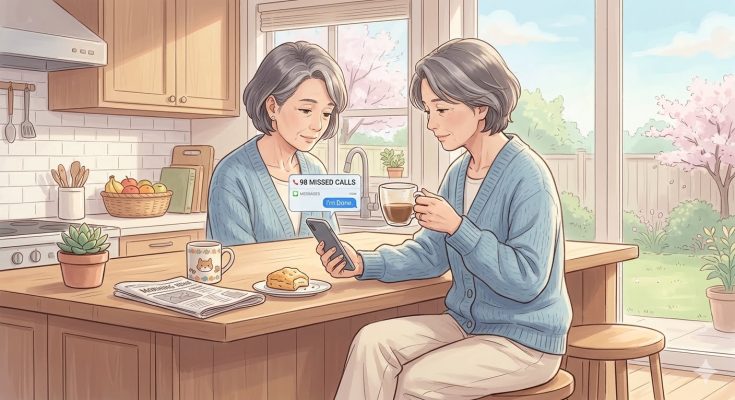
By three in the afternoon, my phone showed ninety-eight missed calls.
A text from Ryan appeared.
Please. The debt collectors are at the door.
I stared at it.
Then I shook my head.
Debt collectors do not appear at your door on a Friday afternoon because a real estate investment collapsed. Not like that. Not with that timing. It was another performance, another attempt to make panic contagious.
I decided to send one reply.
Too late.
Nothing more.
No explanation.
No argument.
Then I powered the phone off and placed it in the glove compartment.
When I returned home, I called the security company that monitored my alarm system.
“This is Margaret Hayes,” I said. “I’m expecting some uninvited family members this evening. If anyone attempts to enter the property without permission, please send patrol.”
“Do you want police called?” the dispatcher asked.
“Not unless they refuse to leave. I want them removed from the property. Peacefully.”
“Yes, ma’am.”
I thanked her and hung up.
Then I went down to the cellar and pulled out a good bottle of Washington red wine Thomas had bought from a small winery in Walla Walla the year before he got sick. We had saved it for a special occasion that never came.
That evening, I opened it.
Not for revenge.
For independence.
I sat on the terrace as the sun lowered behind the evergreens. The air was cold enough that I wrapped myself in a wool shawl. The garden looked bare, but not dead. The rose bushes had been cut back for winter. The lavender had gone silver at the edges. In the distance, a neighbor’s wind chime moved softly.
I thought about that half million dollars.
It would have solved Ryan’s emergency for a while.
It would not have solved Ryan.
It would not have solved Lauren.
It would have taught them that threats worked. It would have made the next demand larger, uglier, more certain. They would have drained me dry and called it family loyalty.
By saying no, I had not just saved money.
I had saved my dignity.
Real wealth is not the balance in your account.
It is the ability to decide what your life belongs to.
Just after sunset, headlights appeared at the end of the street.
Ryan’s car turned the corner and stopped in front of my closed garden gate.
The final act had arrived.
Ryan got out first. Lauren followed, slamming the passenger door so hard the sound cracked across the quiet street.
She looked nothing like the polished woman who had stood in my kitchen three days earlier. Her hair was pulled back too tightly, her mascara smudged at one corner, and her cream sweater had been replaced by a black coat hanging open despite the cold.
She grabbed the metal gate and shook it.
“Margaret!” she shouted. “Open this gate.”
I remained seated on the terrace, wineglass in hand, fifty feet away.
“You can’t do this to us,” she yelled. “We’re losing everything.”
I lifted my voice just enough to carry.
“You told me I was not your family anymore. I don’t open my gate to strangers after dark.”
Ryan stepped closer to the bars.
“Mom, please. The bank froze one of the business accounts. The landlord wants payment by Monday. We can’t even fill the gas tank without using credit.”
“That sounds difficult.”
His face crumpled.
“Lauren pawned some jewelry. Grandma’s bracelet and those earrings from Dad’s mother. We’re trying.”
The words landed hard.
For a second, the terrace seemed to tilt beneath me.
My mother-in-law’s earrings. The little pearl drops she wore to church every Sunday. The bracelet Thomas had kept in a velvet box after she died because he said it belonged to the women of the family.
Lauren had pawned them.
Not because she was hungry.
Not because children needed medicine.
Because she and Ryan had built a life on debt and vanity, then tried to make me pay for it.
I set my wineglass on the small iron table beside me.
“That was a mistake,” I said.
Lauren snapped, “Oh, don’t act sentimental. You weren’t using them.”
Ryan turned on her.
“Lauren, stop.”
She ignored him.
“You’re enjoying this,” she shouted at me. “You’re sitting there like some queen while your son’s life falls apart.”
“No,” I said. “I am sitting on my terrace at my house after refusing to be blackmailed.”
She laughed sharply.
“Blackmailed? We asked for help.”
“You demanded money and threatened to erase me from the family.”
“You’re twisting it.”
“I wrote it down exactly as you said it.”
That silenced her for half a second.
Then she grabbed the gate again.
“You owe him,” she said. “He is your son.”
“I raised him,” I said. “I loved him. I helped him. I gave him more chances than I can count. I do not owe him the rest of my life.”
Ryan’s voice was barely above a whisper.
“Mom.”
I looked at him.
For the first time in days, he truly looked ashamed.
Not inconvenienced.
Not frightened.
Ashamed.
“Go home, Ryan,” I said.
“We might not have one soon.”
“Then find one you can afford.”
Lauren cursed and tried to climb the gate.
Her high heels slipped on the lower bar, and she stumbled back with a frustrated cry.
At that moment, the security truck pulled into the driveway.
Two uniformed guards stepped out. They were calm, professional, and large enough that Lauren stopped moving before they reached her.
“Good evening,” one of them said. “The property owner has asked that you leave.”
Lauren pointed at me.
“That is my mother-in-law.”
The guard did not look impressed.
“Ma’am, you need to return to your vehicle.”
“This is family business.”
“This is private property.”
Ryan touched Lauren’s sleeve.
“Come on,” he said quietly.
She jerked away.
“No. She doesn’t get to do this.”
The second guard stepped closer.
“Ma’am.”
Something in his tone finally reached her.
Ryan looked past the guards to me.
I saw the moment he understood.
I was not crying.
I was not begging.
I was not reaching for my checkbook.
I was fully in control of my own life.
He swallowed hard, then opened the passenger door for Lauren.
She got in without looking at me.
Ryan stood beside the car for one more moment.
“I’m sorry,” he called.
I did not answer.
Not because I wanted to hurt him.
Because sorry, spoken under pressure, is not the same as change.
He got in the car and drove away.
Quiet returned to the neighborhood.
I picked up my wineglass and took one final sip.
It was done.
Saturday morning was the most peaceful I had experienced in years.
No phone buzzing.
No demands.
No emergencies disguised as obligations.
I made coffee and drank it at the kitchen table while sunlight moved across the restored family photographs in the den. The house felt different, though nothing major had changed. The walls were the same. The floors were the same. The rain gutters still needed cleaning.
But the air was mine again.
I called a landscaper after breakfast.
“I want to redo the garden,” I told him. “Nothing too modern. I want old-fashioned roses, native flowers, and something that attracts bees.”
“That sounds beautiful,” he said.
“It used to be,” I replied.
Lauren had convinced me two years earlier to replace half my garden with sterile white gravel, sculptural shrubs, and black planters because it looked “cleaner.” I had agreed because I was tired. Because she made everything sound like a favor. Because Ryan said, “It makes her happy, Mom.”
Now I wanted color back.
I wanted softness.
I wanted life.
After the call, I walked into town for pastries from the bakery near the credit union. The sidewalks were damp. A man in a Seahawks jacket held the door for me. Denise from the market waved through her front window. The world was carrying on, as it always does, indifferent to private heartbreak.
That comforted me.
At home, I finished clearing Lauren’s things from the den.
In the bottom drawer of her desk, beneath old receipts and fabric samples, I found a notebook.
At first, I thought it was a planner.
Then I opened it.
My name appeared on the first page.
Margaret assets estimate.
Below that, Lauren had listed my house, investment accounts, pension income, jewelry, savings, and the approximate value of Thomas’s old coin collection. She had written notes in the margin.
House could sell high in this market.
Push Ryan to discuss inheritance.
Margaret too attached to old stuff.
May need to encourage downsizing.
I turned the pages slowly.
There were calculations for what they could do with my estate after I died. Sell the house. Pay down debt. Buy a larger place. Invest the rest. Use a portion for private club membership.
My hands stayed steady.
That surprised me.
I expected anger.
What I felt instead was confirmation.
Lauren had not seen me as family for a long time.
I had simply found the paperwork.
I placed the notebook in my file with the bank confirmations and legal documents. Not because I planned to use it unless necessary, but because truth deserves a place where it cannot be denied later.
That afternoon, I called an old friend I had neglected for years.
Evelyn answered on the third ring.
“Margaret Hayes,” she said warmly. “I was starting to think you’d forgotten me.”
“I almost forgot myself,” I said.
There was a pause.
Then her voice softened.
“Oh, honey.”
I sat by the window and told her a little. Not everything. Enough.
When I finished, she said, “You need to get out of that house for a while. Come to the coast with me. Cannon Beach, Mendocino, Monterey, anywhere with salt air and no greedy relatives.”
I laughed for the first time all week.
“How about the California coast next month?”
“Now you’re talking.”
We stayed on the phone for nearly an hour, remembering old trips, old jokes, old versions of ourselves before marriage, motherhood, illness, and grief reshaped our lives.
When I hung up, I felt lighter.
For years, I had mistaken usefulness for love. I had said yes until yes became expected. I had let Ryan’s disappointment frighten me more than my own unhappiness.
Now it was my turn.
I had my house.
My money.
My time.
My name.
Ryan and Lauren would have to learn what it meant to stand on their own. It was the hardest lesson I could give him, and maybe the most honest one.
Two weeks passed.
I heard pieces through the quiet channels every family has. A neighbor’s cousin. A friend who knew someone at Ryan’s office. A text from an old acquaintance who did not realize I had stopped being the family rescue line.
Ryan and Lauren had moved out of their rental house.
The landlord would not wait. Their credit was damaged. The SUV was gone. They had taken a small two-bedroom apartment farther east, nowhere near the neighborhood Lauren liked to name-drop.
Ryan picked up consulting work on weekends. Lauren, according to someone who had seen her, was working part-time at a boutique in a shopping center she used to mock.
The $500,000 debt had not disappeared.
It had only become theirs again.
One afternoon, a package arrived on my doorstep.
No return address.
Inside were several wrapped items.
My mother-in-law’s pearl earrings.
The bracelet.
A small silver locket I had given Lauren to wear at her wedding because she had asked for “something old” and I had wanted her to feel welcomed.
Beneath them was a note from Ryan.
Mom,
I’m sorry.
I know that doesn’t fix anything. I know I let Lauren talk to you in ways I should have stopped a long time ago. I was scared, and I was weak, and I made you carry problems that were mine.
Lauren and I fight all the time now. I don’t know if we’re going to make it.
I returned what I could get back.
I’m not asking for money.
I just wanted you to know I understand more than I did before.
Ryan
I read it twice.
Then I folded it and placed it in a drawer.
I did not reply that day.
A letter did not erase years of disrespect. It did not undo the gate, the demand, the silence in my kitchen when I asked my son if this was what he wanted.
But it was the first thing he had given me in a long time that did not come with an invoice attached.
That mattered.
I spent the afternoon packing for my trip with Evelyn.
Sweaters. Comfortable shoes. A blue scarf Thomas used to say made my eyes look brighter. A paperback novel. My camera, because I wanted to remember things that were mine.
Before closing the suitcase, I walked to the mantel and picked up a framed photo of Thomas.
He was standing on a ferry deck, wind messing his hair, laughing at something outside the frame. I touched the glass.
“You would have told me to do this sooner,” I whispered.
And I knew it was true.
Thomas had been kind, but he had never confused kindness with surrender. He had adored Ryan, but he had believed love required backbone. If he had been alive to see our son stand silent while Lauren threatened me, it would have broken his heart.
But he would have stood beside me.
That knowledge steadied something inside me.
The morning of my flight, the new roses had begun arriving in black nursery pots. The landscaper had lined them along the walkway, their labels fluttering in the breeze. Peace. Mister Lincoln. Queen Elizabeth. Old roses with strong roots and names that sounded like survival.
I locked the front door.
The new deadbolt turned smoothly.
For the first time in a long time, I did not check whether Ryan had called before leaving.
The world was wide.
And I was finally ready to see it.
Three months later, I sat on my terrace with coffee and watched morning light move over the water in the distance.
The trip had changed me.
Not in a dramatic way. I did not come back with a new haircut, a new boyfriend, or a plan to sell everything and move to Italy. Life is rarely that cinematic when you are sixty-eight.
But I came home with space inside myself.
I had walked beaches with Evelyn while gulls dipped over the gray Pacific. I had eaten clam chowder in small towns where nobody knew my name. I had slept through the night in hotel rooms without waking to check my phone. I had remembered what it felt like to choose a day simply because I wanted it.
When I returned, my house did not feel empty.
It felt peaceful.
Ryan sent occasional messages.
At first, they were cautious.
Hope you’re well.
The weather has been rough. Watch the back steps.
I made Dad’s chili recipe but it didn’t taste right. What did he put in it?
Then one day:
Lauren moved out.
I sat with that message for a long time.
I did not celebrate. Divorce is not a party, even when a marriage has done harm. But I was not surprised. Lauren had loved the life Ryan promised more than the man himself. When the money disappeared, so did her patience.
Ryan kept working.
He did not ask for money.
That was the change I trusted most.
He asked for his father’s chili recipe. He asked what kind of oil Thomas used on the old cedar bench. He asked if he could come by one Sunday afternoon and help clean the gutters.
I said yes.
But I did not give him a key.
When he arrived, he looked thinner. Older. More like a man who had met consequences and had not enjoyed the introduction.
He stood on the porch holding a bag of coffee beans from a local roaster.
“I brought this,” he said awkwardly. “I remember you like dark roast.”
“I do.”
He glanced at the lock.
The new lock.
Then he looked back at me.
“I know I don’t get a key anymore.”
“No,” I said. “You don’t.”
He nodded.
“I understand.”
Those two words did more for me than his apology letter had.
We sat in the garden with coffee after the gutters were done. The new roses were settling in. Bees moved through the native flowers. The west-side den windows reflected the afternoon light.
Ryan looked toward them.
“You put the photos back,” he said.
“I did.”
“They look good there.”
“They belong there.”
He nodded again.
For a while, neither of us spoke.
Then he said, “I let her change too much.”
I looked at him.
“You let both of you change too much.”
His eyes lowered.
“I know.”
I did not rush to comfort him. That would have been the old Margaret, the one who softened every hard truth before anyone had to feel it.
Instead, I let the words stand.
He needed to feel their weight.
Over the next months, we rebuilt slowly. Not as mother and dependent son. Not as banker and borrower. Not as a widow desperate for scraps of attention and a grown man willing to accept them while looking the other way.
We rebuilt as two adults with history, boundaries, and work to do.
Sometimes he came for Sunday coffee. Sometimes he helped in the garden. Sometimes he talked about his debts and the second job he hated but kept because he had signed the papers and the responsibility was his.
I listened.
I did not rescue.
That distinction saved us both.
The foundation paperwork was completed by spring. Natalie helped me structure it properly, and I began volunteering with a local program that supported children from families facing housing instability. The first time I sat across from a teenage girl filling out a scholarship application, I thought of Lauren’s notebook and its hungry little calculations.
My money would not become a monument to vanity.
It would become school supplies, tutoring, emergency rent support, warm coats, application fees, bus passes, small bridges for children standing at the edge of difficult lives.
That felt right.
Better than right.
It felt like taking something Lauren had tried to shrink into inheritance and expanding it back into purpose.
People often say blood is thicker than water.
Maybe that is true.
But I learned that respect is the foundation of any real relationship. Without it, family becomes a word people use when they want access to parts of you they have not earned.
Ryan was still my son.
I still loved him.
But love no longer meant opening every door, paying every bill, swallowing every insult, or pretending silence was peace.
He was a welcome guest in my life now.
A responsible guest.
A man learning, late but not too late, that his mother was not a safety net stretched beneath every foolish choice.
One evening, nearly a year after Lauren slid that number across my kitchen island, I found the old envelope in my file drawer.
Five hundred thousand dollars.
Underlined twice.
I held it for a moment, then walked to the kitchen where it had all begun.
The granite island shone beneath the warm lights. A vase of roses from my garden sat in the center. Outside, rain touched the windows softly, just as it had that day.
I thought about the woman I had been then.
Tired. Lonely. Afraid of losing a son who had already been drifting away.
Then I thought about the woman I had become.
Not hard.
Not bitter.
Free.
I tore the envelope in half.
Then in half again.
I dropped the pieces into the trash beneath the sink and washed my hands.
My phone buzzed on the counter.
A message from Ryan.
Made Dad’s chili again. Better this time. Still not as good as yours.
I smiled.
Then I typed back:
You probably forgot the smoked paprika.
A minute later, he replied.
I did. Of course I did.
I laughed softly in my quiet kitchen.
There was no grand ending. No perfect reconciliation. No magical moment where everything broken became whole again.
Life is not like that.
But there was peace.
There were boundaries.
There was a son learning humility and a mother learning she did not have to buy love from anyone, not even her own child.
I walked to the terrace with a cup of tea and looked out over the garden. The roses had grown fuller than I expected. Their roots had taken hold. Their blooms opened slowly, confidently, without asking permission.
I was sixty-eight years old.
I lived alone.
And I had never felt lonelier than I did when I was twisting myself into knots trying to please people who saw my kindness as something to spend.
Now I belonged to myself.
That was the most precious gift I had ever given.
Family should never be a place where your love comes with a price tag.
Sometimes, you do not lose people.
You simply stop financing the version of them that was never going to love you back.