
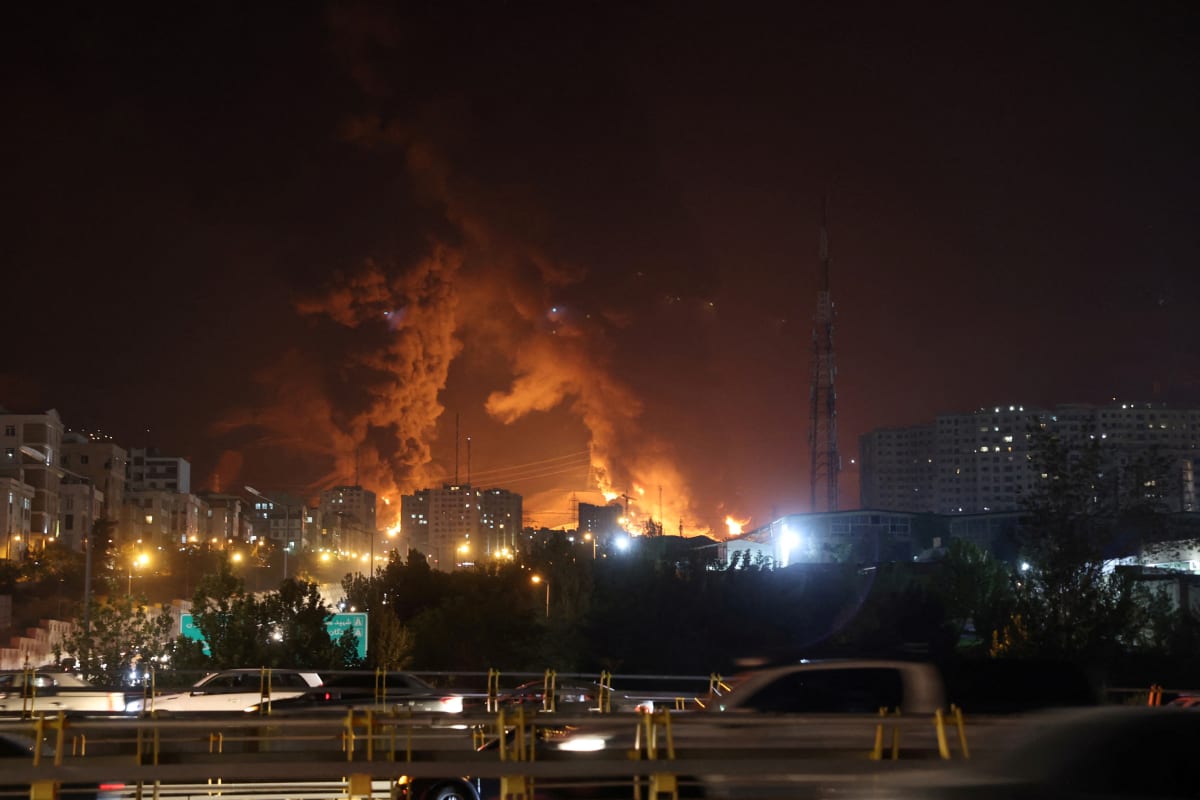
Washington / Tehran — Relations between the United States and Iran have reached a highly combustible point, with military preparations, political rhetoric, and diplomatic maneuvering all unfolding in parallel — raising global concerns about the risk of direct armed conflict.
U.S. Military Escalation and Strategic Positioning
The United States has significantly strengthened its military posture in the Middle East amid continuing tensions with Iran. A second aircraft carrier — the USS Gerald R. Ford — has been ordered to join the USS Abraham Lincoln, expanding the American naval presence near Iran’s borders. The move represents the most substantial U.S. military buildup in the region in months and signals Washington’s resolve to pressure Tehran.
At the same time, President Donald Trump addressed U.S. troops, suggesting that instilling “fear” could influence negotiations with Iran’s leaders — a stark reflection of the administration’s realpolitik approach to diplomatic efforts.
Officials have indicated that the Pentagon is preparing plans for potentially weeks-long military operations against Iran if diplomacy fails and Trump orders offensive action. This preparation goes beyond short-term strikes and would require sustained force projection and logistical support in the region.
In addition, the U.S. has issued advisories urging American citizens in Iran to leave the country due to the intensifying security climate — a rare step underscoring the seriousness of the situation.
Iran’s Response: “All-Out War” and Defensive Mobilization
Iranian officials have made clear that any U.S. attack — even a limited one — would be treated as an “all-out war” against the Islamic Republic. Tehran insists its military is fully prepared for retaliation and has enhanced defenses in strategic areas to counter potential American actions.
While Iran expresses a preference to avoid war, its leadership emphasizes readiness and deterrence, maintaining that any inhalation of national sovereignty would provoke a forceful response.
Diplomacy and Regional Mediation Efforts
Despite severe tensions, both sides have not entirely abandoned diplomacy. Indirect negotiations over Iran’s nuclear program have resumed in Oman, facilitated by intermediaries, with the goal of lowering the risk of military confrontation. These talks are regarded as fragile and heavily constrained by mutual distrust.
Regional actors, including Turkey and other Middle Eastern states, continue to urge restraint and engagement, highlighting the potentially catastrophic consequences of direct conflict.
International and Public Reaction
Global concern is growing as the standoff intensifies. The Council on Foreign Relations’ Global Conflict Tracker notes that the confrontation remains one of the most volatile geopolitical flashpoints, capable of drawing in external powers if escalation occurs.
Public opinion in the United States — according to emerging polling data — shows significant skepticism about entering another prolonged Middle East conflict, even amid rising tensions. Many Americans across political lines express reservations about a new war.
What’s at Stake
Should negotiations fail and military action commence, the consequences could be far-reaching:
-
Regional destabilization involving Iran’s proxies and allied militias.
-
Disruptions to global oil markets, given Iran’s strategic control of key shipping corridors.
-
Heightened U.S.–Middle East military engagement, with significant costs and geopolitical ramifications.
For now, diplomacy and deterrence remain in tension with military readiness, and analysts caution that even a small spark — miscommunication or accident — could rapidly escalate.