Tensions between the United States and Iran have sharply intensified, raising fears of direct military conflict — potentially the most consequential clash in the Middle East in decades. The standoff involves U.S. military buildup, Iran’s warnings of retaliation, renewed indirect negotiations, and global economic and security anxieties.
U.S. Military Buildup and Strategic Moves
The Pentagon is reportedly preparing for operations against Iran that could last several weeks if ordered by President Donald Trump, indicating planning far beyond limited or isolated strikes. Senior U.S. officials say the campaign could target not only nuclear sites but also broader Iranian military and state infrastructure.
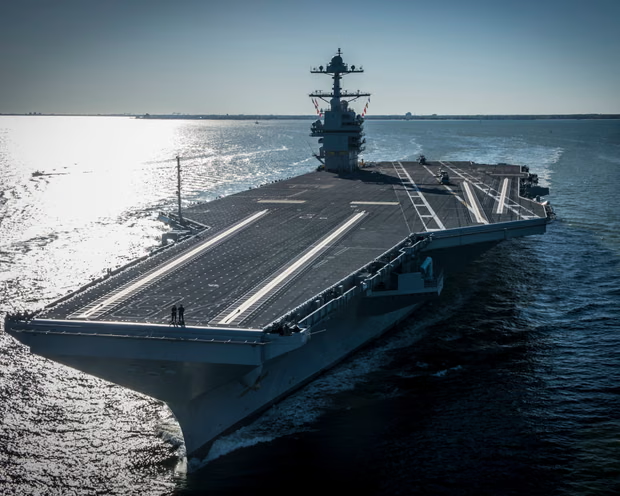
To bolster this posture, the U.S. has deployed a second aircraft carrier strike group — the USS Gerald R. Ford — to join the USS Abraham Lincoln in the Middle East. This move dramatically increases Washington’s naval and aerial capacity in the region.
In remarks tied to these deployments, President Trump stated that “regime change” in Iran would be “the best thing that could happen,” underscoring the administration’s hardening stance.
These developments unfold as U.S. and allied forces remain on alert, with reports that diplomatic talks will also take place in Geneva soon involving U.S. negotiators — despite Washington’s warnings that options, including force, remain on the table.
Iran’s Defiant Response and Regional Warnings
Iran has consistently warned that any U.S. attack will be treated as an act of all-out war. Senior Iranian officials have declared that even limited strikes would prompt the hardest possible retaliation.
Ayatollah Ali Khamenei, Iran’s supreme leader, has explicitly stated that a U.S. attack would not remain confined to Tehran and would instead provoke a “regional war” across the Middle East.
Tehran has also increased its military readiness, including drone deployments and live-fire exercises in strategic routes such as the Strait of Hormuz — a vital global energy corridor.
Diplomatic Channels Still Open
Despite the risk of conflict, diplomatic efforts continue amid deep mutual distrust. U.S. and Iranian representatives have resumed indirect negotiations in Oman aimed at addressing Tehran’s nuclear program and averting full-scale war, though progress remains fragile.
Both sides face enormous gaps in trust and security demands, with Iran seeking guarantees and relief from sanctions while Washington demands verifiable limits on nuclear and missile capabilities.
Economic and Global Impacts
Markets are already reacting to the possibility of conflict. Analysts warn that a potential U.S. invasion or strike on Iran would likely drive oil prices sharply higher and trigger volatility across global markets, including stock indices.
The specter of conflict extends beyond economics — it raises alarming questions about regional stability, international alliances, and security for civilians and military personnel across the Middle East.
Looking Ahead: Escalation or Diplomacy?
The U.S.–Iran standoff remains at a critical crossroads:
-
Military escalation could unfold if diplomatic efforts falter and Trump orders a strike, potentially drawing in Iranian forces, regional militias, and global powers.
-
Diplomacy and negotiation may still avert the worst outcomes if negotiators can bridge gaps on nuclear limits and sanctions.
Both sides continue to publicly express willingness to negotiate while privately preparing for confrontation — a dual track that could either prevent war or precipitate it.